Free bathroom remodel programs for Canadian homeowners 2026

TL;DR:
- Canadian government programs offer free or subsidized funding for essential bathroom accessibility modifications. Combining federal, provincial, and municipal grants through proper sequencing can cover up to half of renovation costs, but approval must be obtained before starting work. Only permanent, structural modifications qualify, and thorough documentation, including occupational therapist assessments, is crucial for success.
A bathroom remodel program free of charge typically refers to a government grant, forgivable loan, or tax credit that helps qualified homeowners pay for essential bathroom modifications. In Canada, the federal Home Accessibility Tax Credit (HATC), Ontario Renovates, and the Home and Vehicle Modification Program (HVMP) are the three most prominent funding sources available in 2026. These programs target seniors, people with disabilities, and low-to-moderate income households. The real opportunity lies in combining multiple programs at once, a strategy known as program stacking, which can dramatically reduce what you pay out of pocket for a bathroom renovation.
What are the main free or subsidized bathroom remodel programs in Canada?
Canada offers several government-funded options that cover essential accessibility renovations. Each program has its own eligibility rules, funding caps, and application process.
Home Accessibility Tax Credit (HATC)
The HATC is a federal program available to seniors and Disability Tax Credit holders. It allows you to claim a 15% tax credit on up to $20,000 of eligible renovation expenses per year, returning up to $3,000 to your household. That credit is non-refundable, meaning it reduces the taxes you owe rather than issuing a cheque. However, the credit can transfer to a family member who paid for the renovation, which is useful when the homeowner has little or no tax owing.
Ontario Renovates
Ontario Renovates is a provincial programme that targets low-to-moderate income homeowners who need accessibility improvements. It provides up to $20,000 in combined assistance: a 10-year forgivable loan of up to $15,000 plus a $5,000 grant specifically for accessibility modifications. The forgivable loan disappears entirely if you remain in the home for 10 years. That structure makes it one of the most generous provincial options in the country.
Home and Vehicle Modification Program (HVMP)
The HVMP provides grants of up to $15,000 for Ontario residents with documented permanent mobility disabilities. Single-household income must fall under $54,000 to qualify. The grant covers permanent modifications like roll-in showers, widened doorways, and accessible toilet installations.
Pro Tip: Municipal programmes in cities like Barrie, Collingwood, and Wasaga Beach sometimes offer additional rebates on top of provincial funding. Contact your local housing office early, as these funds are often first-come, first-served.
| Programme | Maximum Funding | Who Qualifies |
|---|---|---|
| Home Accessibility Tax Credit | $3,000 tax credit | Seniors, Disability Tax Credit holders |
| Ontario Renovates | $20,000 (loan + grant) | Low-to-moderate income homeowners |
| Home and Vehicle Modification Program | $15,000 grant | Permanent mobility disability, income under $54,000 |
Which bathroom renovations qualify, and which are excluded?
Most homeowners expect all bathroom upgrades to qualify. Programs strictly cover essential accessibility features that support independent living, not cosmetic improvements. Understanding this distinction before you plan your bathroom renovation saves time and prevents disqualification.
Qualifying modifications
Eligible work must be permanent and integral to the home. Portable items like shower chairs or standalone bath lifts do not qualify. The following modifications typically meet eligibility criteria:
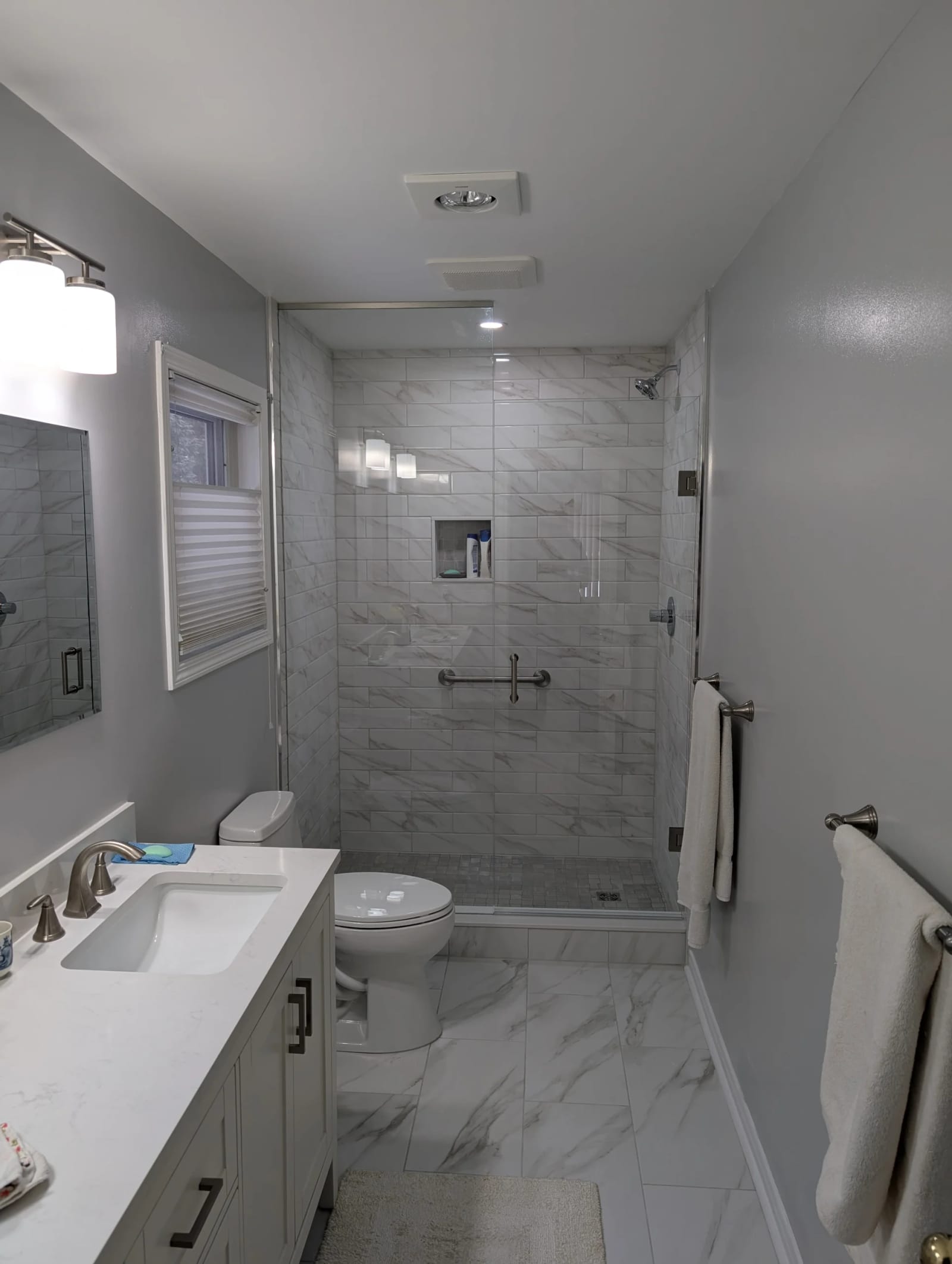
- Walk-in or roll-in showers with barrier-free entry
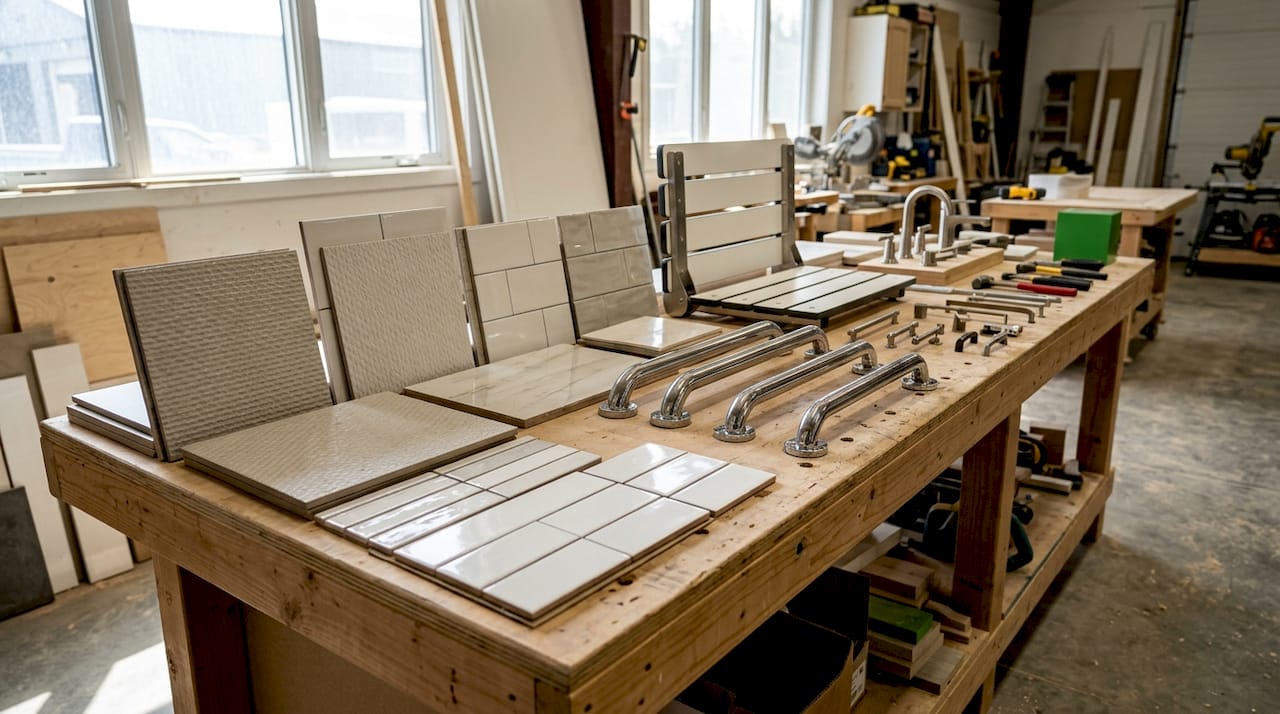
- Grab bars and safety rails permanently anchored to walls
- Comfort-height or wall-mounted toilets
- Non-slip flooring installed as a fixed surface
- Widened doorways for wheelchair access
- Handheld showerheads on fixed sliding bars
What is excluded
Cosmetic work does not qualify under any of these programmes. Replacing tile for aesthetic reasons, installing a new vanity for style, or upgrading fixtures without an accessibility purpose will not be funded. Landscaping, portable equipment, and general home maintenance fall outside every programme’s scope.
Pro Tip: Get a written scope of work from your contractor before applying. Programmes require detailed estimates, and a clearly itemised quote separates eligible from non-eligible work from the start.
Most homeowners misunderstand eligibility, expecting all renovations to qualify. Programmes strictly cover essential accessibility features that support independent living. If you are unsure whether a specific modification qualifies, review the essential vs cosmetic distinctions before submitting your application.
How can you stack multiple programmes to maximise free funding?
Stacking home renovation grants can enable homeowners to recover between 20% and 50% of total renovation costs by combining federal tax credits with provincial grants and municipal rebates. That range is significant on a $30,000 bathroom project. The key is applying to each programme in the correct sequence.
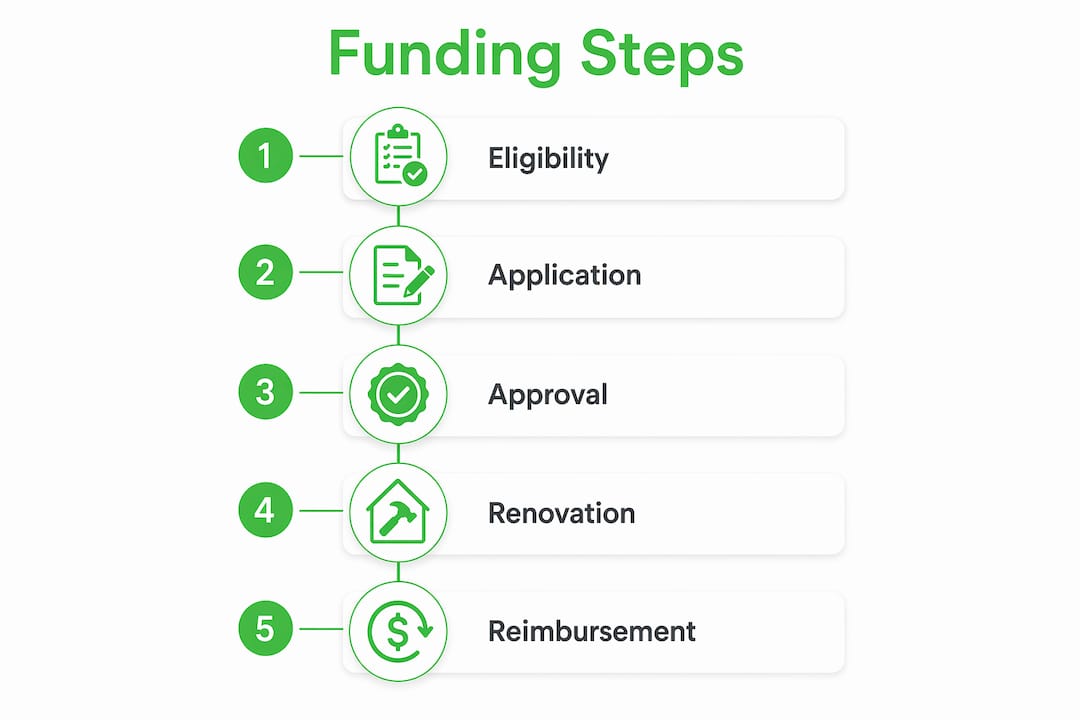
- Start with an occupational therapist assessment. Many programmes require documented medical necessity before approving funds. An OT report justifies every modification you plan and strengthens all applications simultaneously.
- Apply to HVMP first if you have a permanent mobility disability. HVMP approval takes the longest and has strict income requirements. Getting this in place first sets the foundation for other applications.
- Submit your Ontario Renovates application to your local Service Manager. Attach your OT report, proof of ownership, current insurance, and at least two contractor quotes. Income documentation is mandatory.
- File your HATC claim on your annual tax return. This step happens after the renovation is complete. Keep all receipts and contractor invoices, as the Canada Revenue Agency may request them.
- Check for municipal rebates in your area. Homeowners in South Georgian Bay, Simcoe County, and surrounding communities should contact their local housing office for any additional top-up funding.
Pro Tip: Combining energy efficiency rebates with accessibility tax credits can further increase your total savings. If your bathroom renovation includes low-flow fixtures or improved ventilation, ask your contractor whether any federal or provincial energy programmes apply.
The most common mistake is starting construction before receiving written approval. Renovations started before approval automatically void funding eligibility across all programmes. No exceptions exist. Wait for written confirmation from every programme before breaking ground.
Where and how do you find and apply for these programmes?
Locating the right programme takes a few targeted steps. Federal, provincial, and municipal programmes each have separate application portals and administrators.
- Federal HATC: No pre-approval is required. Claim eligible expenses directly on your T1 tax return using Schedule 12. Keep all receipts for at least six years in case of a Canada Revenue Agency review.
- Ontario Renovates: Applications go through your local Service Manager, which is typically your county or municipal housing office. In Simcoe County, contact the County of Simcoe Housing Services department directly.
- HVMP: Apply through the Ontario Disability Support Programme (ODSP) office or a designated community agency. Your caseworker can confirm income eligibility and required documentation.
- Municipal programmes: Search your municipality’s housing or social services page. Wasaga Beach, Collingwood, and Blue Mountain homeowners should check with the Town or Township office for any local accessibility rebates.
Funding approval must occur before starting renovation work. Starting early risks losing eligibility entirely. Most programmes also require professional assessments such as an occupational therapist evaluation or a home inspection before approving major accessibility modifications.
Income thresholds and documentation requirements vary by programme. Typical requirements include proof of home ownership, current home insurance, income verification, and at least two detailed contractor estimates. Gather these documents before submitting any application to avoid delays. For a full breakdown of budgeting considerations, the costs and budgeting guide on the Mighton Construction website covers national and provincial financial programmes in detail.
Key takeaways
Free and subsidized bathroom remodel programmes in Canada cover essential accessibility modifications only, and combining the HATC, Ontario Renovates, and HVMP through careful programme stacking is the most effective way to reduce your total renovation cost.
| Point | Details |
|---|---|
| Federal HATC credit | Claim 15% on up to $20,000 of eligible expenses, returning up to $3,000 per year. |
| Ontario Renovates funding | Combines a $15,000 forgivable loan and a $5,000 grant for accessibility work. |
| Approval before construction | Starting work before written approval disqualifies you from every programme. |
| Permanent modifications only | Portable items like shower chairs never qualify; only fixed, structural changes do. |
| Programme stacking potential | Combining federal, provincial, and municipal funding can recover 20%–50% of total costs. |
What I have learned from watching homeowners navigate these programmes
The single biggest mistake I see is treating these programmes as a reimbursement system. Homeowners complete their bathroom renovation, then try to apply for funding after the fact. Every major programme requires pre-approval. By the time the tile is grouted, the eligibility window is closed.
The second mistake is underestimating the value of an occupational therapist assessment. Homeowners often skip it to save a few hundred dollars. That assessment is what connects your renovation to a documented medical need. Without it, programmes like HVMP and Ontario Renovates have no basis to approve your application. The OT report is not a bureaucratic formality. It is the document that unlocks the funding.
Programme stacking is genuinely powerful when done in the right sequence. I have seen homeowners in the Collingwood and Wasaga Beach areas combine HVMP, Ontario Renovates, and the HATC to cover the majority of a $25,000 accessible bathroom build. That outcome requires patience and paperwork, but the financial result is real. The bathroom renovation advice Mighton Construction publishes for Canadian homeowners goes deeper on this sequencing if you want a step-by-step reference.
One more thing worth saying directly: municipal administrators encourage early inquiry because funding is limited and allocated on a first-come, first-served basis. Waiting until autumn to apply for a programme that runs out of funds in spring is a preventable loss. Call your local housing office in january or february, before the renovation season begins.
— Adam
Mighton Construction’s bathroom renovation expertise
Mighton Construction has delivered accessible bathroom renovations across South Georgian Bay, including Wasaga Beach, Collingwood, and Clearview Township, for over 30 years. The team understands which modifications satisfy programme eligibility requirements and can help you prepare the documentation that administrators need.
Whether you need a roll-in shower, grab bar installation, or a full accessible bathroom build, Mighton Construction manages the project from initial assessment through to finishing. Browse the completed renovation projects to see the quality of accessible bathroom work delivered across the region. To discuss your project and eligibility options, contact Mighton Construction directly for a consultation.
FAQ
What does a free bathroom remodel programme cover in Canada?
Free and subsidized programmes cover permanent accessibility modifications such as walk-in showers, grab bars, comfort-height toilets, and non-slip flooring. Cosmetic upgrades and portable equipment are excluded from all major federal and provincial programmes.
Can I combine the HATC with Ontario Renovates?
Yes. The HATC is a federal tax credit claimed on your annual return, while Ontario Renovates is a provincial grant and loan programme. Both can apply to the same renovation project, provided each programme’s eligibility conditions are met independently.
Do I need an occupational therapist to apply for bathroom renovation funding?
Occupational therapist assessments are often required for major accessibility modifications. The assessment documents medical necessity and is typically mandatory for HVMP and Ontario Renovates applications.
What happens if I start my renovation before getting programme approval?
Starting renovations before receiving written approval automatically disqualifies you from funding. All major programmes require a pre-approval inspection or site assessment before any work begins.
Are these programmes available outside Ontario?
The federal HATC applies across all Canadian provinces and territories. Provincial programmes vary by region. Homeowners outside Ontario should contact their provincial housing ministry or local Service Manager to identify equivalent accessibility renovation funding in their area.